Your Brain Is Still Waiting for a Ping That Isn't Coming
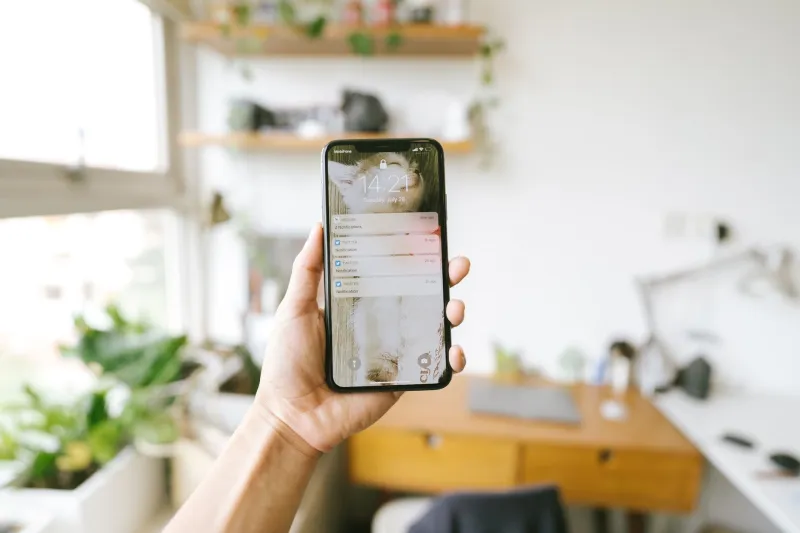
It happened again this morning. You were in the middle of something — making coffee, watching TV, maybe just sitting there — and you felt it. That little vibration. The phantom buzz. You picked up your phone, turned it over, squinted at the screen. Nothing. No notification. No missed call. No alert from an app demanding your attention.
Your phone was silent. Your brain just decided it wasn't.
Welcome to one of the stranger side effects of growing up in the notification era: a reflex so deeply conditioned that it outlasts the actual stimulus by years, sometimes decades. Researchers have a clinical name for it — phantom vibration syndrome — but that name makes it sound more exotic than it is. This is incredibly common. Some studies suggest upwards of 80 percent of smartphone users have experienced it. And for people who came of age during the peak notification years of the mid-2000s through mid-2010s, it's less a quirk and more a permanent feature of how their nervous systems work.
The Interface That Rewired You
To understand why this happens, you have to go back to the design philosophy behind early smartphone notifications. The whole system was built around interruption — the idea that your device should be able to reach into whatever you were doing and pull your attention out. The vibration, the chime, the little red badge on the icon. Every element was engineered to feel urgent.
And it worked. Extremely well. Too well, honestly.
The human brain is remarkably good at learning to anticipate rewards, and early push notifications were essentially a slot machine running in your pocket. Sometimes you checked and there was something genuinely important. Sometimes it was a like on a photo you'd already forgotten about. Sometimes it was a promotional email from a store you visited once in 2013. The unpredictability of the reward was the whole mechanism — your brain kept firing the anticipation signal because it could never be sure what was coming.
"This is classic operant conditioning," says one behavioral psychology researcher who studies human-technology interaction. "The variability of the reward schedule is precisely what makes the response so durable. You're not just trained to respond to the notification. You're trained to anticipate it."
The Ghost in the Machine (That's Now in Your Head)
Here's what makes phantom notifications particularly interesting from a cultural standpoint: they persist long after people change their behavior. People who have turned off virtually all notifications, switched to Do Not Disturb permanently, or even downgraded to a minimalist phone still report the phantom buzz. The habit isn't stored in the device. It's stored in the person.
Derek Vasquez, a 38-year-old teacher from Austin, Texas, went through what he describes as a "digital detox" about four years ago. He disabled almost every notification on his phone, deleted several social apps entirely, and started leaving his phone in another room while he worked. "The phantom buzzes got worse at first," he says, laughing. "My brain was clearly not getting the memo. It kept sending the alert even when there was nothing to alert me about. That went on for probably six months."
He still gets them occasionally, years later. "It's like a muscle memory for my nervous system. The phone trained me and then I changed the rules, but nobody told my brainstem."
Old Interfaces, Permanent Impressions
There's a specific generational dimension to this phenomenon that makes it particularly resonant for the RetroPixel crowd. The people most thoroughly conditioned by early notification culture — the BlackBerry red light blinkers, the original iPhone badge counters, the MSN Messenger pop-up generation — are now in their thirties and forties. They spent their most neurologically formative tech years being systematically trained by interfaces that no longer exist in the same form.
The original BlackBerry notification light, that little blinking red LED, is a perfect example. For millions of corporate workers and early adopters in the mid-2000s, that blink was the most important pixel on any screen. Whole behavioral rituals grew up around it. People checked it constantly, reflexively, the way earlier generations checked a watch or a clock on the wall. When BlackBerry faded, the blink went with it. But the reflex? That stayed.
"I haven't owned a BlackBerry since 2012," says one user in a RetroPixel forum thread about the topic. "I still catch myself glancing at the top corner of my current phone looking for a blink that isn't there. It's muscle memory for a device I no longer own."
When the Training Outlasts the Trainer
What makes phantom notifications worth examining — beyond the fact that they're genuinely weird — is what they reveal about the relationship between human behavior and interface design. We talk a lot about how technology shapes culture, how apps change the way we communicate, how platforms influence what we think and feel. But phantom notifications are evidence of something more granular: technology can physically reshape reflexes at the neurological level.
The interfaces that conditioned us most thoroughly aren't necessarily the ones we use now. They're the ones we used during the formative years of our digital lives, during the period when everything about being online was new and the brain was most actively building its models for how all of this worked. Those early systems — the AIM away message ping, the Myspace notification, the original Facebook poke alert — left grooves.
Modern apps have gotten better, or at least more sophisticated, about notification design. There's more nuance now, more user control. But the damage, if you want to call it that, was done in the earlier era. The training happened before the trainers knew quite what they were doing.
Learning to Live With the Ghost
Most people who experience phantom notifications don't find them particularly distressing — more curious than anything. It's a small, strange reminder that our bodies and brains have been shaped by the technologies we've lived alongside, in ways that don't simply switch off when we change our settings or upgrade our devices.
Derek Vasquez has made a kind of peace with his phantom buzzes. "I've started thinking of them as a little historical marker," he says. "Like, that's my brain remembering what it was like to be plugged in all the time. It's not a bug. It's just a record of something that happened."
A behavioral fossil, preserved in nerve and reflex. Your phone has moved on. Your nervous system is still waiting for a ping from 2009.