Pixels With Purpose: How Early Anime Studios Turned Digital Limits Into Timeless Art
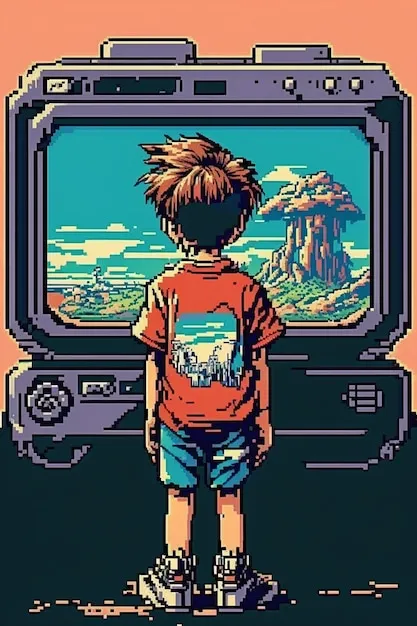
Photo: vintage anime cel animation studio Japan 1990s digital art pixel, via img.freepik.com
There's something almost poetic about the idea that some of the most visually stunning animation in history was produced on machines that couldn't stream a YouTube video without choking. Yet that's exactly what happened in the late 1980s and through the 1990s, as Japanese animation studios began dipping their toes into digital production pipelines — not because it was easy, but because it was the future, even when the future looked kind of blocky.
For fans of classic digital culture, this era represents a genuine golden age of creative problem-solving. Limited RAM, primitive compositing software, and color palettes that would make a modern graphic designer wince somehow produced work that continues to influence animators, game artists, and digital illustrators decades later.
When the Paintbrush Met the Mouse
Studio Ghibli's transition into digital tools didn't happen overnight, and it definitely didn't happen smoothly. Through most of the 1980s, the studio — like virtually every other animation house in Japan — relied on hand-painted cels, a painstaking process where individual frames were literally painted on sheets of transparent acetate. The results were gorgeous, but the workflow was brutal.
By the early 1990s, Ghibli's leadership began experimenting with digital ink-and-paint systems. The landmark shift came with Princess Mononoke in 1997, where the studio used digital compositing tools to blend traditionally hand-drawn animation with early CG elements. The pixel count was low. The render times were astronomical. And the results were, frankly, extraordinary.
What made it work wasn't processing power — it was the animators themselves. Forced to work within tight resolution constraints, they developed an almost intuitive understanding of how to imply detail rather than render it explicitly. A mountainside didn't need every rock modeled; a few well-chosen pixel clusters, placed just so, could trick the eye into filling in the rest. This technique — sometimes called "visual suggestion" in animation circles — became a hallmark of the era.
The Beautiful Problem of Not Enough
Constraint-driven creativity isn't a new concept, but the specific flavor of limitation that early digital tools imposed on animators was genuinely unique. When your software can only handle a certain number of colors on screen simultaneously, you start making very deliberate choices about which colors matter most. When your compositing timeline lags every time you add a new layer, you learn to be ruthlessly efficient with your scene construction.
This is why so much early digitally-assisted anime has a visual quality that modern productions — with their unlimited layers and 4K render pipelines — sometimes struggle to replicate. There's an intentionality baked into every frame. Nothing is accidental because nothing could be accidental. The machines simply wouldn't allow it.
Studios like Gainax, working on projects like Neon Genesis Evangelion in 1995, pushed this philosophy even further. Famously working with a shredded budget and tight deadlines, the team used digital tools to create some of the most emotionally resonant — and stylistically bold — animation sequences of the decade. Still frames, repeated cuts, stark graphic compositions: what looked like shortcuts were actually sophisticated responses to what the technology could and couldn't do.
The Indie Renaissance That Owes Everything to Old Hardware
Fast forward to the 2020s, and something interesting is happening in the American indie animation scene. Creators on platforms like YouTube, Newgrounds (still alive and kicking, by the way), and even TikTok are deliberately reaching back to pixel-era aesthetics — not out of nostalgia alone, but because those visual languages carry genuine expressive weight.
Artists like those behind the Lackadaisy animated short or the various micro-studios producing limited-run web series have spoken in interviews about the influence of late-'90s and early-2000s anime on their visual sensibilities. The chunky outlines, the limited frame rates used expressively, the way color fields were blocked rather than blended — these aren't just throwback choices. They're a toolkit.
And that toolkit was forged in the fires of early digital limitation.
Some animation educators have started building curricula around this history, arguing that understanding why those constraints existed helps modern students make more intentional choices even when they have unlimited computational resources. It's the difference between knowing every rule so you can break them deliberately versus just throwing everything at the screen and hoping something sticks.
What the Pixels Actually Looked Like
For those who want to do their own visual archaeology, there are some incredible resources available. The Wayback Machine has preserved early animation studio websites with production galleries that show the raw digital output of the era. Fan communities on Reddit and dedicated Discord servers have spent years cataloging the specific software versions, resolution specs, and color limitations that different productions worked under.
Watching a film like Spirited Away (2001) — which marked Ghibli's first fully digital production pipeline — with this context in mind is a revelatory experience. You start noticing the places where the digital tools opened up new possibilities (those extraordinary water sequences, the fluid transformation scenes) alongside the moments where you can almost feel the animators working with the technology's grain rather than against it.
That collaborative relationship between artist and tool, between human intention and machine limitation, is what defined an era. And it's what keeps pulling new generations of creators back to study those old pixels like they're sacred texts.
The Legacy Lives in Your Favorite Indie Games, Too
It's worth noting that this lineage doesn't stop at animation. The pixel art renaissance in indie gaming — think Celeste, Shovel Knight, Undertale — draws from exactly the same well. Many of the artists behind those projects have cited early anime aesthetics as direct influences, noting how the visual grammar developed under digital constraint translated beautifully into game pixel art.
The line from a hand-painted Ghibli cel to a digitally composited frame from Princess Mononoke to a lovingly crafted sprite in a modern indie game is straighter than most people realize. It's all the same conversation about what you can express when you have to be precise about every single dot.
At RetroPixel, we think that's worth celebrating — loudly, and often. The artists who figured out how to make beauty with blunt instruments didn't just make great movies. They built a visual language that's still being spoken, remixed, and passed down. That's not nostalgia. That's living history.