Beige Is the New Black: How the Boring Old Computer Tower Became a Collector's Holy Grail
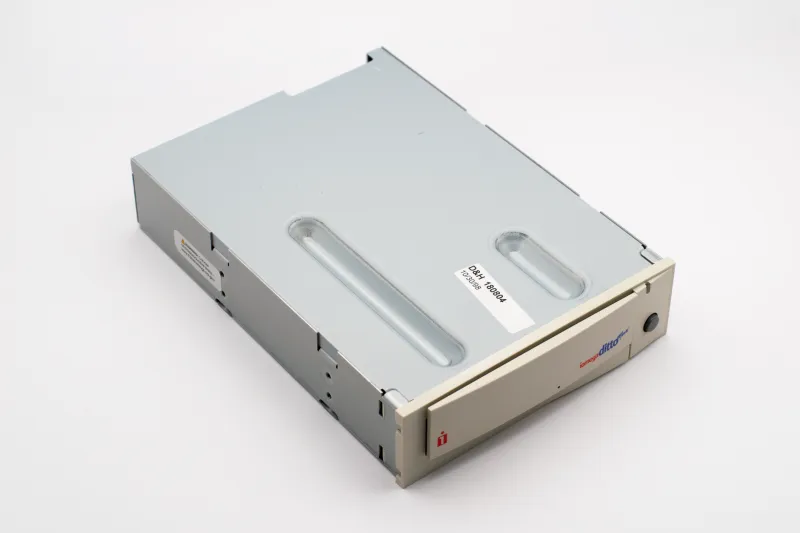
There's a specific shade of plastic that defined an entire decade of American life. Not quite white, not quite gray, somewhere in the exhausted middle — a color that paint manufacturers actually classified under names like "Warm Putty" and "Office Bisque." It coated the towers, monitors, keyboards, and disk drives that hummed away in every school, cubicle farm, and family den from roughly 1985 to 2003. Nobody loved it. Nobody asked for it. And now, somehow, people are paying serious money to get it back.
The vintage beige computer case has become a genuine collectible, and the community forming around it is a lot more passionate — and a lot more interesting — than you might expect.
How Did We Get Here?
To understand the appeal, you have to remember what came after. When Apple dropped the original iMac in 1998 in a translucent Bondi Blue shell, it felt like a bomb going off in a beige world. The industry took the hint fast. By the mid-2000s, computers were black, silver, or white. By the 2010s, they'd thinned out to near-invisibility — aluminum slabs and glass rectangles that seemed to apologize for taking up space.
Sleek minimalism won the design war. But winning a war doesn't mean everyone agrees with the outcome.
"There's a whole generation of people who grew up with those machines," says Marcus Webb, a collector based in Columbus, Ohio, who runs a storage unit's worth of vintage PC hardware. "The beige tower was the first computer they ever touched. It had weight to it. Texture. You could hear it thinking. Modern computers are basically appliances now — you're not supposed to think about them. These old boxes demanded your attention."
Marcus has around forty cases in his collection, ranging from an early IBM PC-XT shell to a mid-90s Packard Bell tower he describes, with genuine affection, as "a masterpiece of cheap plastic engineering." He doesn't just store them. He restores them, cleaning off decades of yellowing with a chemical process called retrobrighting — a technique borrowed from vintage console collectors — that returns the plastic to something close to its original shade.
The Yellowing Problem (and Why People Love It Anyway)
Here's the thing about beige plastic from that era: it doesn't stay beige. The flame retardants used in the manufacturing process react with UV light and oxygen over time, pushing the color toward a deep, uneven amber. Some collectors hate this and spend hours reversing it. Others have started to embrace it as a kind of patina — the computing equivalent of a leather jacket that's been worn in.
"I actually stopped retrobrighting my pieces," admits Diane Okafor, a graphic designer in Portland who started collecting vintage cases about three years ago. "There's something honest about the yellowing. It's proof the thing existed in the world, that it was used. A lot of modern tech is designed to look brand new until it breaks, then you throw it away. These cases carry their history on the outside."
Diane's interest started professionally. She was doing a project on early interface design and kept finding herself more drawn to the physical hardware than the software. The chunky drive bays, the satisfying snap of a 5.25-inch floppy door, the ventilation grilles that were genuinely decorative — she started photographing them, then buying them, then arranging them in her studio as reference objects.
"The design language is so specific to that moment," she says. "You can date a case within a few years just by the shape of the power button or the badge placement. It's like reading a fossil record of corporate design decisions."
Modding Culture Meets Museum Sensibility
Not everyone in the beige box community is interested in pure preservation. A thriving modding scene has grown up around these cases, treating them as raw material for genuinely creative projects. The goal isn't always to restore a machine to working order — sometimes it's to gut the hardware entirely and rebuild something new inside a vintage shell.
This practice, sometimes called "case modding" in its traditional form, has taken on a different flavor in the retro community. People are installing modern mini-ITX motherboards inside gutted AT-form towers, running current operating systems behind a facade of late-80s industrial design. The result is a machine that looks like it belongs in a 1994 office but runs circles around anything from that era.
"I call it time travel with better specs," says Jordan Trevino, a hardware enthusiast from Austin who documents his builds on a dedicated forum. His most recent project involved an old Gateway 2000 tower — the kind with the cow-print box — fitted with contemporary components and a custom-cut acrylic side panel. "The case is the art. Everything inside is just practical."
Jordan notes that the Gateway branding alone generates enormous nostalgia response online. "Post a picture of that spotted box and watch the comments. People lose their minds. There's real emotional weight attached to these objects that just doesn't exist with a modern Corsair case, no matter how RGB it gets."
The Anti-Minimalism Statement
There's a broader cultural argument lurking under all of this. The resurgence of beige cases is happening at the same moment that a general fatigue with tech industry aesthetics has gone mainstream. The notion that good design means invisible design — that the best product is the one you never have to think about — has started to feel less like wisdom and more like a way to make consumers passive.
Vintage computer hardware pushes back against that instinct. These machines were never designed to disappear. They were designed to communicate function. The drive bays told you exactly how many drives you could add. The expansion slot covers invited you to crack the thing open. The physical reset button acknowledged, without embarrassment, that computers crash and you need a way to deal with it.
"Modern tech treats you like you can't be trusted with the actual machine," says Marcus Webb. "Beige boxes treated you like someone who might actually want to understand what they were using. I find that weirdly respectful."
Where to Find Them (Before Everyone Else Does)
Prices are still relatively accessible compared to other vintage tech categories — for now. Thrift stores, estate sales, and Craigslist remain the best hunting grounds for common models, where a mid-90s tower might run anywhere from free to around forty dollars. Rarer units — certain IBM models, early Compaq towers, or anything with original retail packaging — have started climbing on eBay as the community grows.
Condition matters, but not always in the direction you'd expect. Yellowing is fine; heavy cracking or missing panels is harder to forgive. Working hardware inside is a bonus but not required for collectors focused on the cases themselves.
For anyone curious about getting started, the retro computing forums at places like Vintage Computer Federation are friendly to newcomers, and the retrobrighting tutorials floating around YouTube are genuinely excellent.
The Box That Built the Internet
It's easy to be glib about nostalgia — to reduce all of this to grown adults getting sentimental about the computers they used in middle school. But there's something more interesting happening in the beige box community than simple nostalgia. These collectors are making an argument about what technology should feel like: present, tactile, repairable, honest about its own age.
The beige tower sat in the corner of the room where a generation first learned to type, first connected to the internet, first stayed up too late doing things their parents didn't fully understand. It wasn't beautiful. It wasn't trying to be. It was just there, doing its job, patient and loud and slightly warm to the touch.
Turns out that's worth something after all.