Idle Hours, Infinite Art: How Screensavers Became the New Gallery Wall
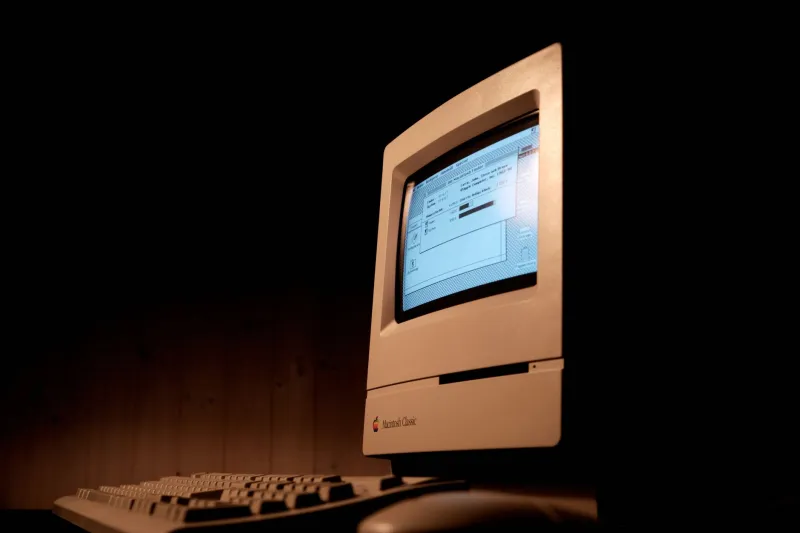
There's a moment, somewhere around the third hour of a late-night work session, when your screen goes dark and something magical takes over. Maybe it's a cascade of geometric shapes drifting through deep space. Maybe it's a rendered aquarium full of fish that never existed in nature. Maybe it's flying toasters — always the flying toasters — looping in that particular shade of early-90s beige. For a generation that grew up watching those images drift across the family desktop, the screensaver wasn't just a system feature. It was a mood.
And now, apparently, it's a market.
From Phosphor Protection to Premium Product
The screensaver's origin story is genuinely humble. Engineers in the early days of CRT monitors worried that a static image left on screen too long would permanently etch itself into the phosphor coating — a phenomenon called burn-in. The solution was simple: keep the pixels moving when nobody's watching. What nobody predicted was that those moving pixels would eventually become something people actively wanted to watch.
AfterSaver, Prolific, and a handful of indie developers selling through their own Gumroad storefronts are now charging anywhere from $4.99 to $40 or more for premium screensaver packages. Some go the subscription route — think $8 a month for rotating seasonal collections, new drops every few weeks, curated themes that shift with the holidays or the cultural moment. The buyers? Mostly millennials and older Gen Z users who remember screensavers fondly and now have both the disposable income and the aesthetic vocabulary to treat them as something more than a background process.
"It's basically wall art that you only see when you step away," says Marcus Delray, a freelance motion designer based in Austin who started selling custom screensaver packs in 2022. "People hang prints they barely look at. This is the same idea, except it moves, and it only shows up when you're not actively at your desk. There's something kind of poetic about that."
The Nostalgia Engine Running Under the Hood
It would be easy to write this off as pure nostalgia bait — and honestly, nostalgia is doing a lot of heavy lifting here. The aesthetic signatures of classic screensavers are deeply embedded in a certain generation's memory. The 3D pipes that slowly connected across a black screen. The starfield warp that made every Windows 95 machine feel like the bridge of a starship. The bouncing DVD logo that somehow became its own cultural artifact decades later.
But the people buying and making contemporary screensavers aren't just recreating the past. They're remixing it. Artists like Celeste Huang, who runs a small digital studio out of Portland, design screensavers that pull from retro visual language — scan lines, dithered gradients, lo-fi color palettes — while applying modern rendering tools that make the final product look genuinely stunning on a 4K display. Her most popular pack, a collection of slowly rotating retro-futurist cityscapes that look like they were ripped from a 1987 sci-fi novel cover, has sold over three thousand copies.
"The reference points are old, but the craft is completely current," Huang explains. "I'm not trying to make something that looks bad on purpose. I'm trying to make something that feels like a memory, but better than the memory actually was."
That phrase — better than the memory actually was — might be the most honest summary of what the whole screensaver revival is actually selling.
Status Symbol for the Desk Setup Era
It's impossible to talk about this trend without acknowledging the rise of the desk setup as a legitimate aesthetic category. YouTube and TikTok are full of channels devoted entirely to workspace tours, monitor configurations, and ambient lighting rigs. The screensaver fits neatly into this ecosystem as one more layer of intentional visual curation. Your keyboard is custom. Your desk mat is a limited-edition collab. Your monitor, when idle, displays a looping art piece that took someone three weeks to render.
This is also where the status dimension kicks in. Some of the more exclusive screensaver creators operate on a limited-release model — drops of 500 copies, gone in hours, with secondary market trading happening in Discord servers. The logic is borrowed wholesale from streetwear and sneaker culture, applied to software that, technically speaking, does nothing productive whatsoever. And yet the demand is real.
"I sold out in forty minutes," Delray says of his most recent limited drop, a set of hand-drawn animated screensavers inspired by early Macintosh system art. "People were posting about it like it was a sneaker release. I genuinely did not expect that."
The Philosophical Case for Art That Waits
There's a quieter argument being made in some corners of the screensaver community — one that's less about aesthetics and more about what it means to have art that only activates in your absence. It's almost meditative, the idea that your computer is doing something beautiful precisely when you've stepped away from it. You don't watch it perform. You come back to find it mid-loop, like catching a song already in progress.
Some artists lean into this deliberately. Brooklyn-based developer and artist Jonah Ferris creates what he calls "ambient screensavers" — pieces designed specifically to be peripheral, never demanding attention but always rewarding a glance. His current project is a slowly evolving landscape that changes based on the time of day and the local weather, pulling data in the background to shift the palette from dawn golds to midnight blues. It's less screensaver and more living painting.
"The whole history of screensavers is about filling dead time with something," Ferris says. "I just think we should be more intentional about what that something is."
Why This Moment Makes Sense
Step back far enough and the screensaver revival starts to look like a logical response to a specific cultural exhaustion. We've spent years optimizing our screens for productivity, compressing every idle moment into content consumption. The screensaver, by its very nature, refuses that logic. It exists in the space between tasks. It doesn't ask you to engage. It just runs.
For people who grew up watching those early programs cycle through their loops — who remember the specific comfort of a darkened room lit by a slow parade of geometric forms — there's something genuinely restorative about bringing that energy back. Even if it costs $12 a month. Even if it's just pixels moving across a screen that nobody's watching.
Maybe especially then.
At RetroPixel, we've always believed that the things that seem frivolous about classic digital culture usually turn out to be the most meaningful. The screensaver might be the clearest proof yet that we were right.