Tape Archaeology: The Obsessive Hunt to Digitize VHS Before the Magnetic Memory Fades Forever
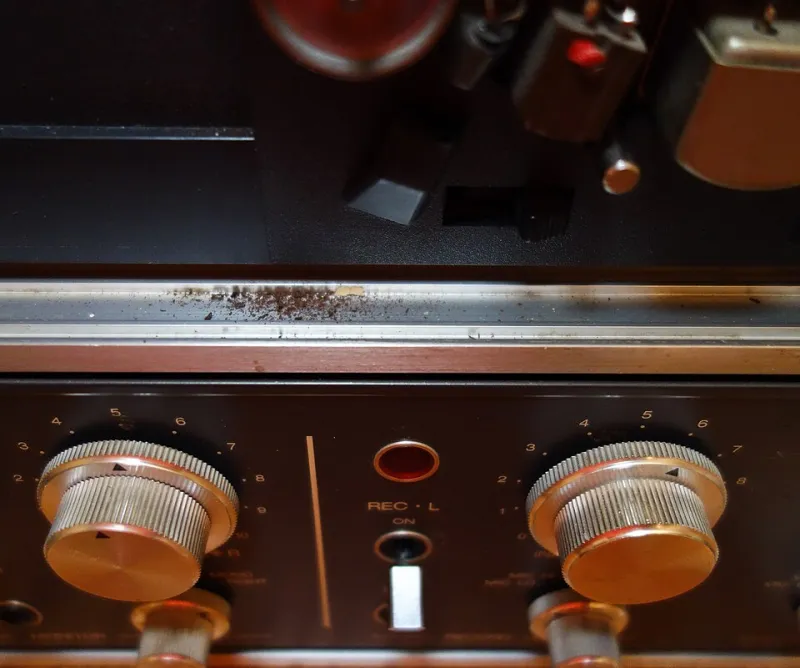
Photo: Danielteolijr, CC BY-SA 4.0, via Wikimedia Commons
There's a particular smell that longtime VHS collectors know well — that faint, slightly musty mix of old plastic and magnetic oxide that hits you the moment you crack open a storage bin full of tapes. For a growing community of home archivists, that smell has become the scent of purpose. Because somewhere inside those aging cassettes, sandwiched between layers of deteriorating magnetic coating, are moments that exist nowhere else on earth.
The race to save them is on — and it's getting urgent.
Why Now? The Clock Is Already Ticking
Magnetic tape doesn't age gracefully. Depending on storage conditions, most VHS tapes have a functional lifespan of somewhere between 10 and 30 years. Do the math: tapes recorded in the late '80s and early '90s are already pushing the outer edge of that window. A phenomenon called "sticky shed syndrome" — where the magnetic binder layer literally deteriorates and gums up playback heads — is silently destroying footage that was never meant to be precious but absolutely is.
This isn't a problem for major studios with climate-controlled vaults. It's a crisis for regular people who shoved their family's holiday recordings, their kid's first soccer game, or a local news broadcast they taped on a whim into a shoebox in the garage. Once those tapes go, the footage is gone. Not archived somewhere. Just gone.
That reality has lit a fire under a surprisingly large community of DIY digitizers, many of them millennials and Gen Xers who grew up watching those tapes and are only now realizing what's at stake.
The Gear Setup: More Accessible Than You Think
For newcomers, the technical side of VHS digitization can look intimidating, but the community has done a remarkable job of making the learning curve manageable. The core setup most enthusiasts recommend starts with a decent VCR — ideally a late-model JVC or Panasonic Hi-Fi unit, which tend to have cleaner playback heads — connected to a video capture card.
Popular capture devices like the Elgato Video Capture, the AVerMedia USB capture cards, or the more enthusiast-grade Hauppauge units run anywhere from $30 to $150. The signal typically runs through an S-Video or composite connection, gets captured via software like OBS or VirtualDub, and lands on your hard drive as a raw video file that you can then clean up and compress.
For people who want to go deeper, there's an entire rabbit hole waiting. The TBC (Time Base Corrector) is a piece of gear that stabilizes the wobbly sync signal inherent to VHS playback, and dedicated archivists swear by units like the DataVideo TBC-1000 for dramatically improving output quality. Some hobbyists even modify their VCRs — a process called "VCR modding" — to get cleaner signal paths and better head alignment.
Online communities on Reddit (particularly r/VHS and r/DataHoarder) and dedicated Discord servers are where most of this knowledge lives, traded freely between people who genuinely want more folks to save their tapes.
What People Are Actually Finding
Here's where the story gets genuinely moving. Ask anyone who's gone through a large personal VHS collection, and they'll almost always have a discovery story.
Some are straightforward treasures: a grandparent's voice captured on a Christmas morning recording from 1989, preserved in that slightly washed-out, warm-toned VHS palette that feels more emotionally honest than any smartphone video. A family road trip. A backyard birthday party where someone who's no longer around is laughing in the background, totally unaware they're being filmed.
Others are genuinely strange finds. People are turning up locally-produced public access shows, regional commercials for businesses that closed decades ago, and off-air recordings of TV programs that don't appear to exist in any official archive. There's a whole subcategory of VHS archaeology focused on these "orphaned" recordings — footage that historians and media preservationists would love to get their hands on.
The Internet Archive has become a destination for some of these finds. Uploaders contribute digitized public access content, old local news broadcasts, and regional oddities that would otherwise vanish. It's genuinely grassroots media preservation happening in real time.
The Emotional Weight of the Work
What nobody tells you before you start digitizing is how psychologically heavy the process can be. You're sitting there in front of a monitor, watching footage play back in real time — you can't fast-forward during capture — and you're essentially being forced to sit with the past at its original speed.
That's a different experience than scrolling through old photos. There's movement. There's sound. People are talking in voices you might not have heard in years. The emotional ambush factor is real, and plenty of people in these communities talk openly about needing to take breaks during long digitization sessions.
But that weight is also part of why people keep doing it. There's something deeply satisfying about completing a tape — watching the progress bar hit 100%, knowing that whatever was on that cassette is now safe, backed up in multiple places, no longer at the mercy of magnetic decay and temperature swings in an unheated storage unit.
From Personal Archive to Cultural Record
The broader implication of this movement is something that archivists and media historians are starting to pay attention to. The official record of American life in the '80s and '90s is largely what got preserved by networks and studios. But the actual texture of everyday life — the way people talked, the things they watched, the local color of a thousand different communities — often only exists on consumer-grade tape in private hands.
When those tapes go undigitized, that texture disappears. When they get converted and shared, even partially, it fills in gaps that no amount of official archiving ever could.
So yeah, it's a hobby. It involves a lot of fiddling with RCA cables and arguing on forums about the best way to handle a moldy cassette shell. But it's also something more than that — a distributed, crowd-sourced act of cultural memory. One tape at a time, people are deciding that the past is worth the trouble of saving.
And honestly? Given what's on some of those tapes, they're right.